
AI in Education
Artificial intelligence is transforming education by creating new opportunities to personalize learning, strengthen teaching, improve organizational effectiveness, and prepare learners for an AI-enabled future. The Learning Systems Institute (LSI) partners with schools, universities, governments, and industry to research, develop, implement, and evaluate AI solutions that improve educational outcomes while promoting responsible and human-centered use of artificial intelligence.
AI Workforce Development
Preparing educators and learners for an AI-driven world requires more than learning how to use AI tools. LSI develops AI literacy programs, competency frameworks, professional learning, and workforce development initiatives that equip educators, students, and educational leaders with the knowledge and skills needed to use AI effectively, responsibly, and ethically.
AI-Powered Learning Tools
LSI develops AI-powered technologies that help educators personalize learning, improve student outcomes, and reduce time spent on routine instructional tasks. Our unique approach combines generative AI with expert-developed, standards-aligned Open Educational Resources (OERs), enabling teachers to customize trusted instructional materials instead of creating new content from scratch.
One example is our AI-powered Open Educational Resource Customization Tool, which enables teachers to adapt vetted instructional resources to meet the diverse needs of their students while maintaining alignment with academic standards. Teachers can adjust reading complexity, differentiate instruction, and generate classroom activities and assessments, allowing them to personalize learning without creating instructional materials from scratch. By combining the efficiency of generative AI with the quality and reliability of evidence-based instructional resources, this approach supports personalized learning at scale.
AI for Teaching and Learning
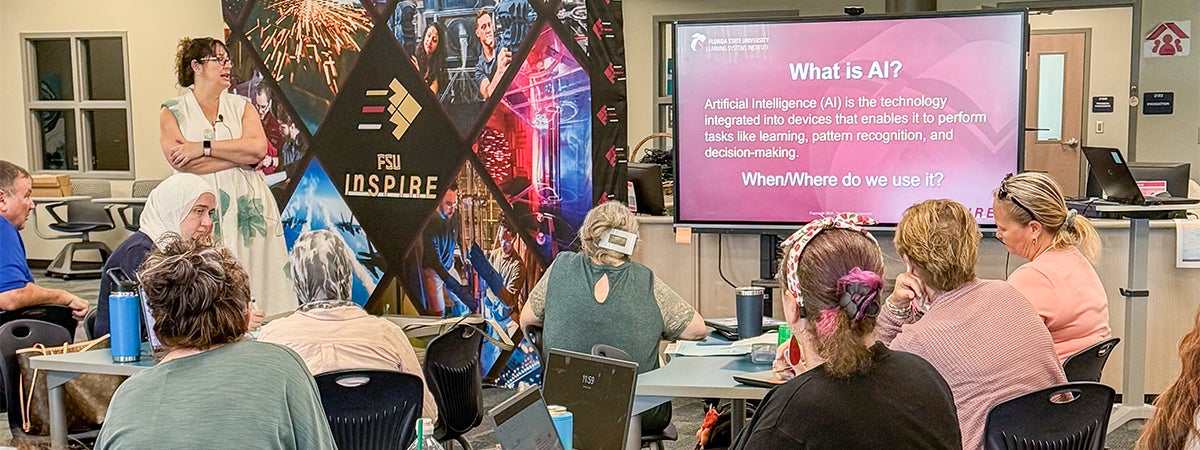
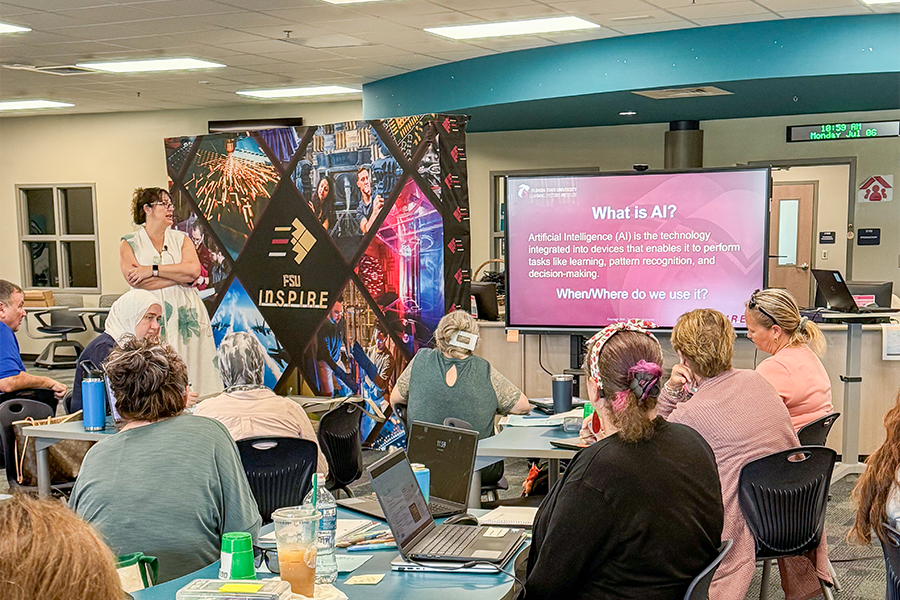
LSI helps educators integrate AI into classroom practice to enhance instruction, improve productivity, and increase student engagement. Our professional learning programs focus on AI literacy, prompt engineering, instructional design, assessment, and responsible AI use, helping educators confidently incorporate AI into teaching and learning.
Through initiatives such as FSU InSPIRE, LSI is preparing more than 1,000 K–12 teachers across Florida’s Panhandle to effectively integrate AI into their classrooms. LSI has also partnered with Microsoft to co-develop an AI Educator training and certification program that equips teachers with practical skills for responsible classroom implementation.
Modernizing Professional Learning
Our approach to artificial intelligence is intentionally holistic and focused on modernizing professional learning. Rather than teaching AI as a stand-alone technology, LSI helps educators learn to use it in conjunction with high-quality instructional materials (HQIM), research-based best practices in pedagogy, and a human-centered co-design process. Teachers learn about AI while actively applying it to authentic instructional challenges, allowing content knowledge, pedagogy, and technology to develop together. Throughout each course, teachers deepen their understanding of how AI works while applying it to standards-aligned instruction, critically evaluating its outputs, considering ethical implications, and maintaining their professional judgment. Educators also demonstrate their competency by earning industry-recognized certifications. This integrated approach ensures that AI strengthens effective teaching and meaningful student learning while preparing educators and students to thrive in an evolving, technology-driven workforce.
Responsible AI and Institutional Readiness
Successful AI adoption requires thoughtful planning, strong governance, and a commitment to ethical practice. LSI helps educational organizations develop AI strategies, implementation roadmaps, institutional policies, and governance frameworks that address privacy, security, bias, transparency, accessibility, academic integrity, and responsible AI use. We help institutions build the capacity to adopt AI in ways that are effective, equitable, and sustainable.
Research and Innovation
As a research institute, LSI evaluates the design, implementation, and impact of AI-enabled educational innovations. Our work examines how AI influences teaching, learning, educator effectiveness, and organizational performance, generating evidence that informs educational practice, policy, and future innovation.
Why LSI?
What distinguishes LSI is our ability to combine educational research, AI software development, instructional design, open educational resources, professional learning, and large-scale implementation into integrated solutions. From developing AI-powered technologies to preparing educators and institutions for responsible AI adoption, LSI helps partners move beyond experimentation to meaningful, evidence-based impact.
AI in Education at Work
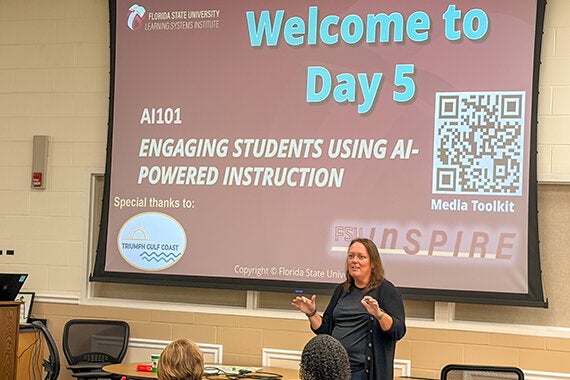
AI101: Engaging K–12 Students Using AI-Powered Instruction
Introduces AI foundations, responsible use, prompting, durable skills, and the co-design of locally relevant, classroom-ready, standards-aligned instructional resources grounded in HQIM and research-based pedagogy.
AI102: Leveraging AI Prompt Engineering for Engineering Design Pedagogy
Advances teachers’ skills in iterative and comparative prompting, human-in-the-loop review, model-eliciting activities, ethical decision-making, and the design of open-ended, workforce-connected instruction. Teachers use AI as a co-design partner while retaining responsibility for instructional quality, accuracy, and appropriateness.
AI200: Google Gemini for Career-Connected Learning
Participants use Google Gemini to co-design standards-aligned, HQIM-informed case studies built around authentic workplace scenarios. These learning experiences help students apply academic content, durable skills, ethical reasoning, and problem-solving strategies in future-ready contexts.
AI for Teaching and Learning
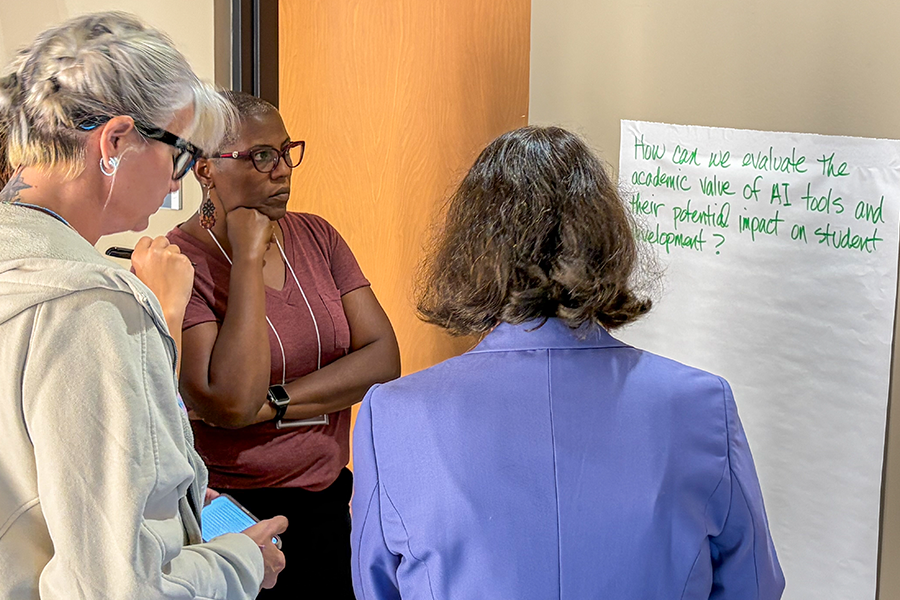
AI Ethics

Machine Learning
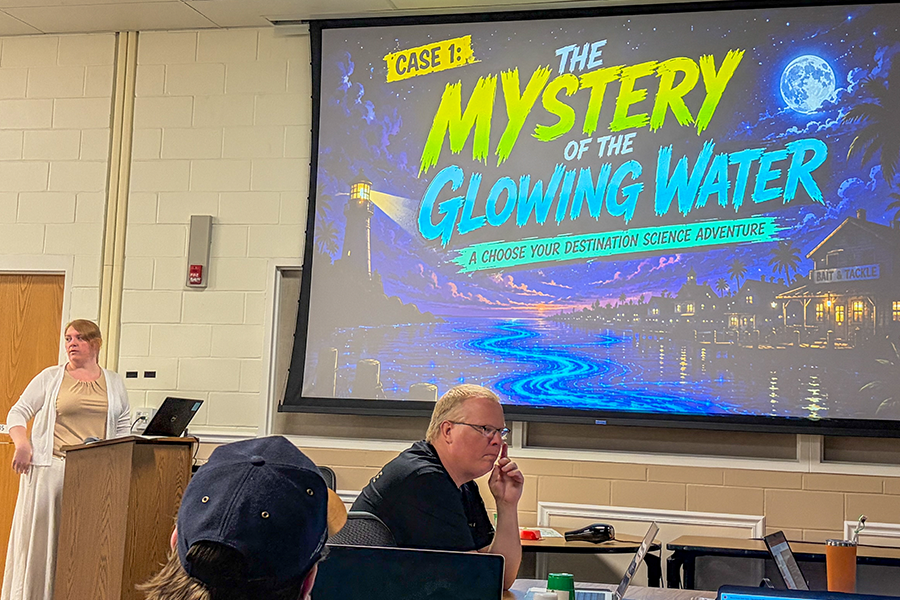
Creation of AI Educational Resources
AI at LSI
Partnerships and Leadership
• Feature InSPIRE’s collaboration with Microsoft and the FSU/Microsoft AI professional learning certificate and badge.
• Highlight the InSPIRE team’s development as Google AI educators and explain how that expertise is strengthening and expanding the AI professional learning pathway.
• Prominently feature the Ralph Stair Prize for Innovation in Education, which recognized the InSPIRE workforce development team’s AI professional learning and provides external validation of LSI’s leadership in AI education.
• Include the America 250 AI Co-Design Challenge and the six recognized educators as evidence that teachers are applying their AI learning to create meaningful, relevant instructional experiences.
Sharing our AI Expertise with statewide, national, and international audiences.
• Teaching and Learning with AI in Europe - The Netherlands
• AI and Cybersecurity GCC Forum Kuwait
• UCF Teach with AI Conference
• Florida Association of Science Teachers (FAST) Conference
• FSU Innovation Hub presentation connecting K–12 AI developments to higher education
• Teaching and Learning with AI Conference Europe at Breda University of Applied Sciences in the Netherlands
• Keynote presentations at the FGCU and FSW K–12 AI Symposium
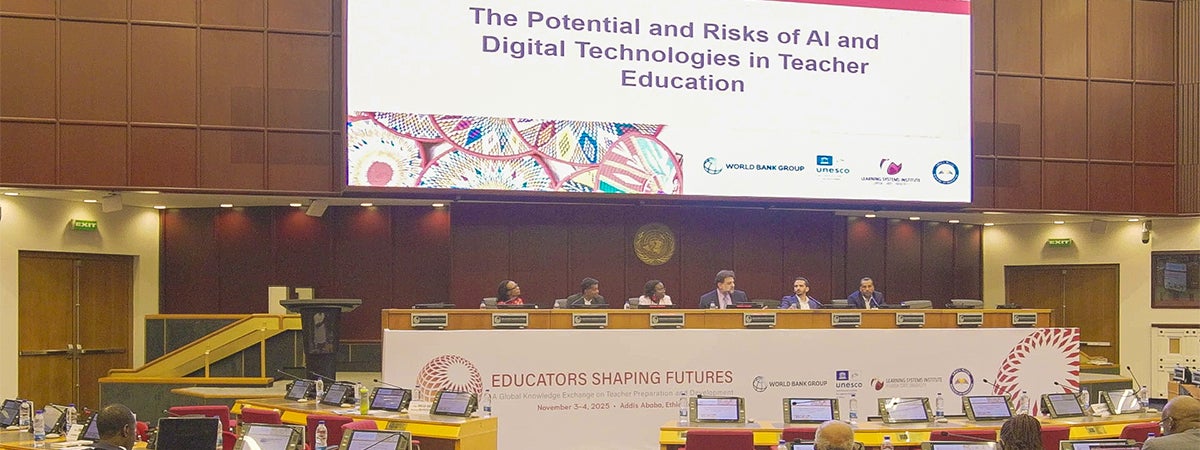
• UNESCO/World Bank Educators Shaping Futures in Addis Ababa, Ethiopia
• IREX panel in Washington D.C. ”Before They Teach: Lessons and Perspectives on Education in an AI-Driven World”
AI in Education Panel Discussion: Educators Shaping Futures