
Transforming Teacher Education in Zambia
Funding Partner: USAID
Principal Investigator: Dr. Stephanie Simmons Zuilkowski
Project Announcement
October 15, 2020
The Learning Systems Institute (LSI) at Florida State University will lead a five-year, $15 million project sponsored by the U.S. Agency for International Development (USAID) to improve pre-service teacher training in Zambia.
LSI faculty, in collaboration with partners School-to-School International and the University of Zambia, will work with 12 universities and colleges of education in the country to improve the training of primary grade teachers.
“This project is an exciting opportunity for FSU to take a lead role in improving primary teacher education at a national level, building on lessons learned in our previous projects in countries such as Nigeria and Ethiopia,” said Stephanie Simmons Zuilkowski, an LSI associate professor and the project’s director.
Over the five-year period, the “USAID Transforming Teacher Education Program” will give more than 60 Zambian teacher educators the skills to deliver effective instruction to 9,000 college and university students studying to become primary grade teachers.
Despite significant investments in early-grade literacy in Zambia, pre-service teacher education has been largely excluded from previous development programs. This work will connect teacher training with the evidence-based practices already used in Zambian primary schools, ensuring that teachers enter the classroom prepared to help children learn how to read and to provide safe learning environments.
“This is an excellent opportunity for Professor Zuilkowski and the LSI team to use their years of research and experience to help improve teacher training in Zambia and thus the greater educational system in the country,” said Vice President for Research Gary K. Ostrander. “We are incredibly proud of the work they do and are excited to see what they will achieve with this new project.”
To implement the program, LSI faculty will deliver graduate-level courses on reading instruction in Zambia. Six Zambian teacher education faculty will complete six-month residencies at the FSU College of Education, and four faculty members will receive scholarships to obtain master’s degrees in education at FSU. Florida State will also organize study tours for additional Zambian faculty.
With USAID support, FSU faculty and Zambian educators will work together to better connect teacher training with the country’s primary school literacy curriculum. The project team will revise pre-service teacher training courses, develop new textbooks for teachers and create centers of excellence dedicated to training new teachers.
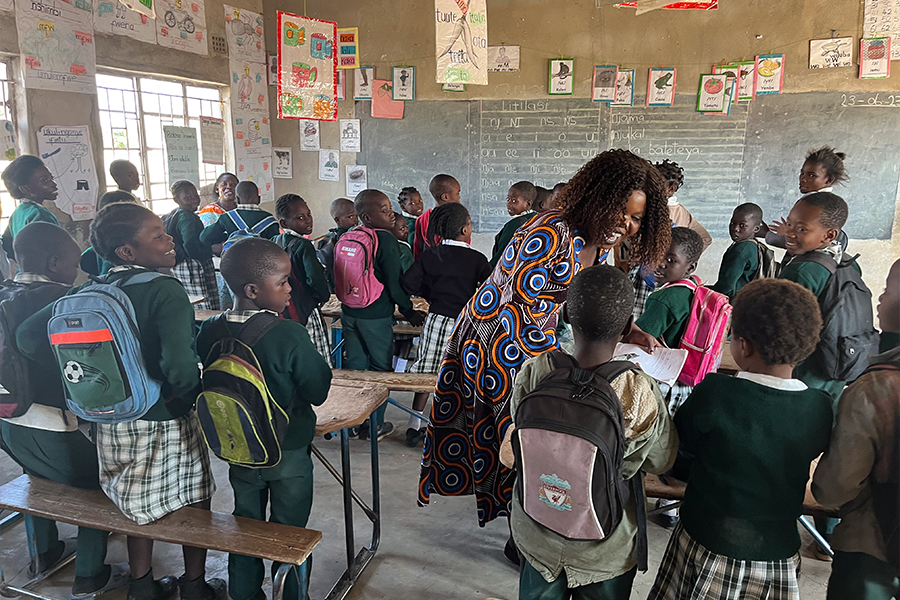
The project also will build relationships between teaching colleges and universities and primary schools. Those connections will give teachers-in-training opportunities to practice their skills and provide settings where lecturers can conduct participatory action research about early-grade reading.
“Transforming Teacher Education brings the Learning Systems Institute to a whole new level of engagement in international educational development,” said Jeffrey Milligan, Director of the Learning Systems Institute. “For the first time in 25 years, LSI will assume overall leadership for a large, nationwide, multiyear USAID project. LSI has a long legacy of international engagement, and this new project positions us to compete effectively for new international projects in the coming years.”
The Learning Systems Institute has partnered with USAID on several previous projects. LSI is a partner on the Northern Education Initiative Plus project, which is underway in two northern Nigerian states to train teaching instructors and learning facilitators in early grades reading instruction.
LSI also worked with Bayero University, Kano in Nigeria to establish the Nigerian Center for Reading Research and Development, the first reading research center in the country. As part of that initiative, faculty from Bayero University, Kano visited Florida State to take graduate classes in education and to work with faculty mentors to design and implement a research project they carried out when they returned to Nigeria.
“LSI faculty have extensive experience working with college and university faculty, teachers and government education officials around the world to improve the teaching of early grade reading, including in conflict-affected and complex multilingual settings,” Zuilkowski said.
In the past decade, LSI faculty have also worked on USAID-funded education activities in Honduras, the Philippines, Uzbekistan, Ethiopia and Indonesia, as well as U.S. Department of State projects in Indonesia, India, Ukraine, Brazil, Colombia, Ecuador, Peru, Pakistan, Egypt, St. Lucia, Grenada and Suriname.
On behalf of the American people, USAID promotes and demonstrates democratic values in over 80 countries around the globe, and advances a free, peaceful, and prosperous world. In support of America’s foreign policy, the Agency leads the U.S. Government’s international development and disaster assistance through partnerships and investments that save lives, reduce poverty, strengthen democratic governance, and help people emerge from humanitarian crises and progress beyond assistance.
2022 Update
Key accomplishments during year two of the USAID-funded project included completion of the Graduate Foundational Literacy Course as well as the subsequent research symposium, support to six Zambian lecturers to participate in FSU residencies and two Zambian lecturers to participate in master’s degree programs, completion of the drafting process for six language and literacy modules for use by pre-service teaching lecturers in Zambian COEs and universities, development and piloting of a revised school experience approach along with accompanying guidelines and observation tool, procurement of story books and instructional materials for demonstration schools, and completion of two participatory action research projects with a journal article already submitted for one of the research projects.
2023 Update
Key accomplishments during year three of the USAID-funded project included finalization of new instructional modules for language and literacy for use in pre-service teacher training programs in colleges of education, training of lecturers from 12 colleges and universities on the new materials, development and rollout of a revised school experience approach along with accompanying guidelines and observation tools, support to two Zambian lecturers to participate in FSU residencies, and two Zambian lecturers to participate in master’s degree programs. The participatory action research team published a peer-reviewed article in an international journal. In collaboration with the University of Zambia, TTE supported a special master’s program in literacy, language, and applied linguistics open to the lecturers who participated in TTE. The lecturers can complete their master’s degrees in one year, half the usual duration of study. Coaching visits commenced, allowing lecturers to receive feedback on their instruction from TTE staff and UNZA partners.
2024 Update
The Learning Systems Institute (LSI) at Florida State University is leading a five-year, $15 million project sponsored by the U.S. Agency for International Development to improve pre-service teacher training in Zambia. Over the five-year period, the USAID Transforming Teacher Education Activity will give more than 60 Zambian teacher educators the skills to deliver effective instruction to 9,000 college and university students studying to become primary grade teachers.
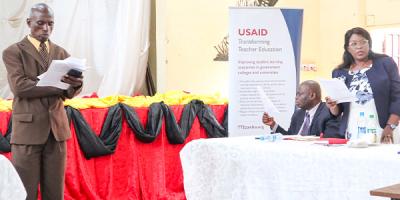
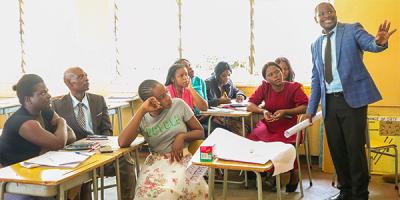
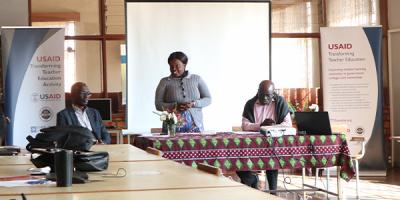
During year four of the activity, LSI staff and its partners conducted a pedagogy training workshop for Literacy and Language Education (LLE) lecturers to enhance their uptake of pedagogical best practices for preparing student teachers to deliver quality instruction and to train vice principals and heads of language and literacy departments in coaching so that they continue supporting lecturers’ pedagogical development. The latter is part of TTE’s sustainability plans to ensure lecturers continue to grow professionally even after the TTE activity has ended. TTE then conducted follow up coaching to ensure lecturers were implementing what they learned in the pedagogy workshop. Coaches provided feedback and, in some cases, extra teaching resources to help the lecturers.
During the 2023-2024 academic year, four Zambian college of education lecturers completed semester-long residencies at FSU. At the University of Zambia, 21 TTE-participant lecturers completed the Special Master’s of Education Program in Literacy, Language and Applied Linguistics, earning their master’s degrees in only one year and at a reduced cost.
Additionally, TTE facilitated demonstration school lessons learned and planning meetings between demonstration school leadership, COE leadership, and MOE provincial and district officials to share views on how implementation of demonstration school engagement worked in 2023 and how to enhance collaboration in 2024.
One of the most significant achievements of TTE to date is the institutionalization of the new school experience model developed by TTE and key stakeholders. In January 2024, the MOE issued a circular to public COEs on institutionalization of the updated SE approach. The circular issuance ensures the updated SE approach is now policy and it will continue to be implemented even after TTE ends. The updated SE approach is designed to ensure student teachers are equipped with the skills needed to teach primary schools learners how to read.
2025 Update
During the fifth year of implementation, which ended prematurely in February 2025, the Transforming Teacher Education (TTE) team accomplished a number of goals. TTE supported two Zambian literacy and language education (LLE) lecturers to complete semester-long residencies at FSU, and two completed abbreviated residencies. All TTE’s participating colleges have at least one FSU resident fellow. In year five, TTE worked with the returned fellows to facilitate continuing professional development (CPD) activities in their respective College of Educations (COE)/universities. This provided the returned fellows with an opportunity to share the knowledge, skills, and experiences they gained during their residencies while also earning CPD credits.
During the previous year’s coaching visits to COEs, TTE had learned that several college Vice Presidents and Heads of Section/Heads of Department whom TTE had previously trained had since retired, been promoted, or transferred. Therefore, TTE planned an online refresher coaching training. For sustainability purposes, TTE involved officials from the Directorate of Teacher Education and Specialized Services (TESS) in co-facilitating the training. By doing this, TTE aimed to prepare TESS officials to continue providing the coaching training in the future when TTE ends. In October 2024, TTE conducted a one-day in-person coaching training of trainers (TOT) for 10 TESS officials plus the Director at the MOE’s Curriculum Development Center.
Following the TOT for TESS officials, TTE held an online coaching training for VPs, HOSs/HODs, and PESOs. A combined total of 21 participants attended.
While TTE ended approximately six months earlier than expected, the team was proud to have met the majority of its goals related to capacity development in the pre-service teacher education system, curriculum development to support instruction in language and literacy courses in teacher education programs, and system support to improve the quality of the teaching practicum experience.